Most residential solar websites suffer from a massive conversion bottleneck: the lead capture form. Traditional forms ask for name, email, phone, and electric bill amount upfront. To a modern shopper, this screams 'I am about to get spammed by aggressive sales reps.' This friction results in drop-off rates as high as 85%.
1. The Psychology of Value-First Qualification
To lift conversion rates, you must flip the value proposition. Instead of asking for data before giving information, structure your quote wizard as an educational tool. Provide immediate, interactive feedback that rewards the user for completing steps. This builds trust and leverages the psychological principle of reciprocity.
2. The Golden Rules of Wizard Layout
Here are the top UX design practices to optimize your solar quote funnel:
• Start with Micro-Commitments: The first question should be extremely easy and non-intrusive. E.g. 'What is your average monthly power bill?' or 'Do you own your home?' These require simple taps and carry no threat of unsolicited calls.
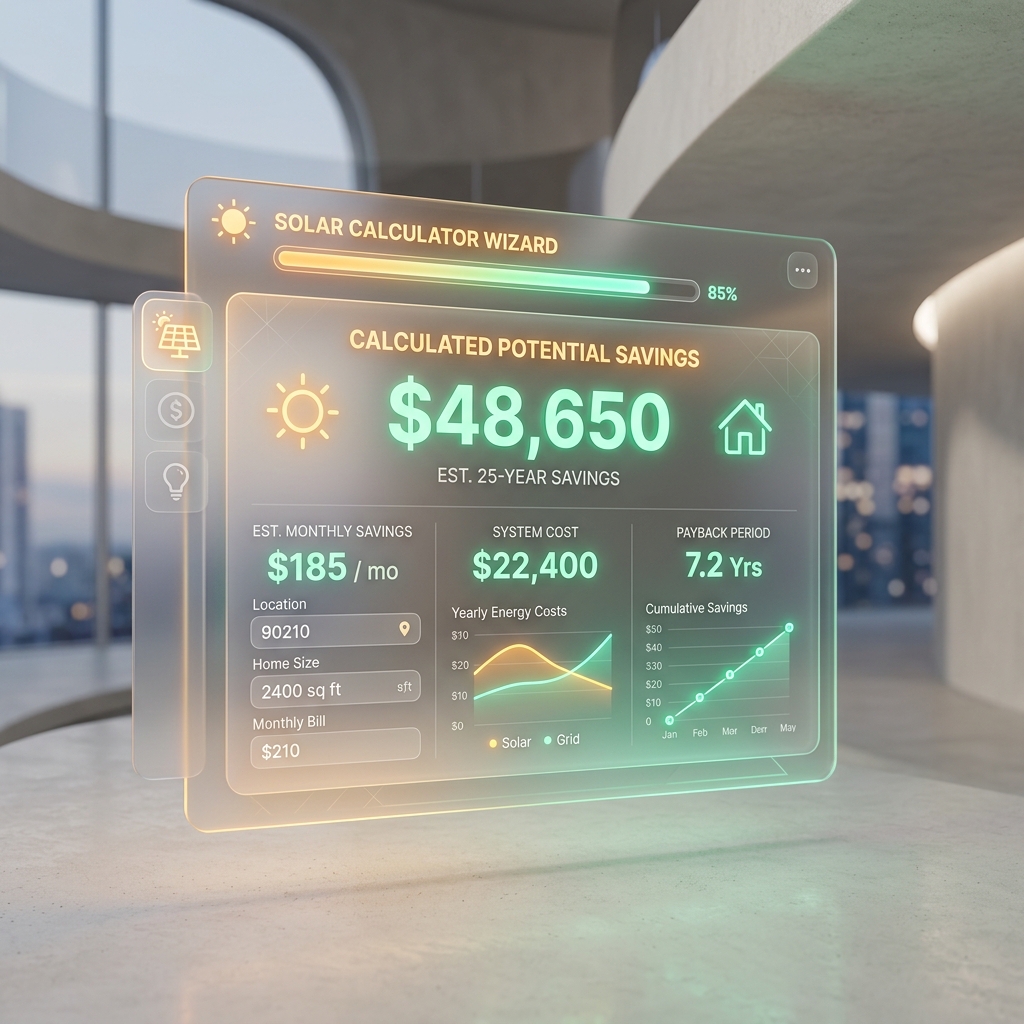
• Visual Progress Indicators: Show a progress bar. Homeowners are far more likely to complete a task if they know exactly how close they are to the finish line.
• Autocomplete Addresses: Implement Google Places API. As soon as the user starts typing their address, autofill the fields. This reduces typing effort and secures accurate address data for solar roof modeling.
• Postpone Personal Contact Info: Do not ask for phone or email until the very last step. Once a user has spent 60 seconds inputting their bill, roof details, and savings calculations, they are highly invested. They will complete the contact field to get their customized final report.
A top-performing wizard does not just collect info. It actively educates. As they increase their bill slider, show real-time estimates of their 25-year cumulative savings. This visual impact turns a mundane form into a compelling sales demo.